What is Florida beach sand made of?
Pick up a handful of Florida beach sand and you are holding a geological story that spans hundreds of millions of years and thousands of miles. Each grain traveled a long way before arriving at your feet: some from mountains that no longer exist, others from creatures that lived in ancient seas. Florida beach sand is far more complex and scientifically interesting than most beachgoers realize, and its composition reveals fundamental truths about the geological forces that shaped the state.
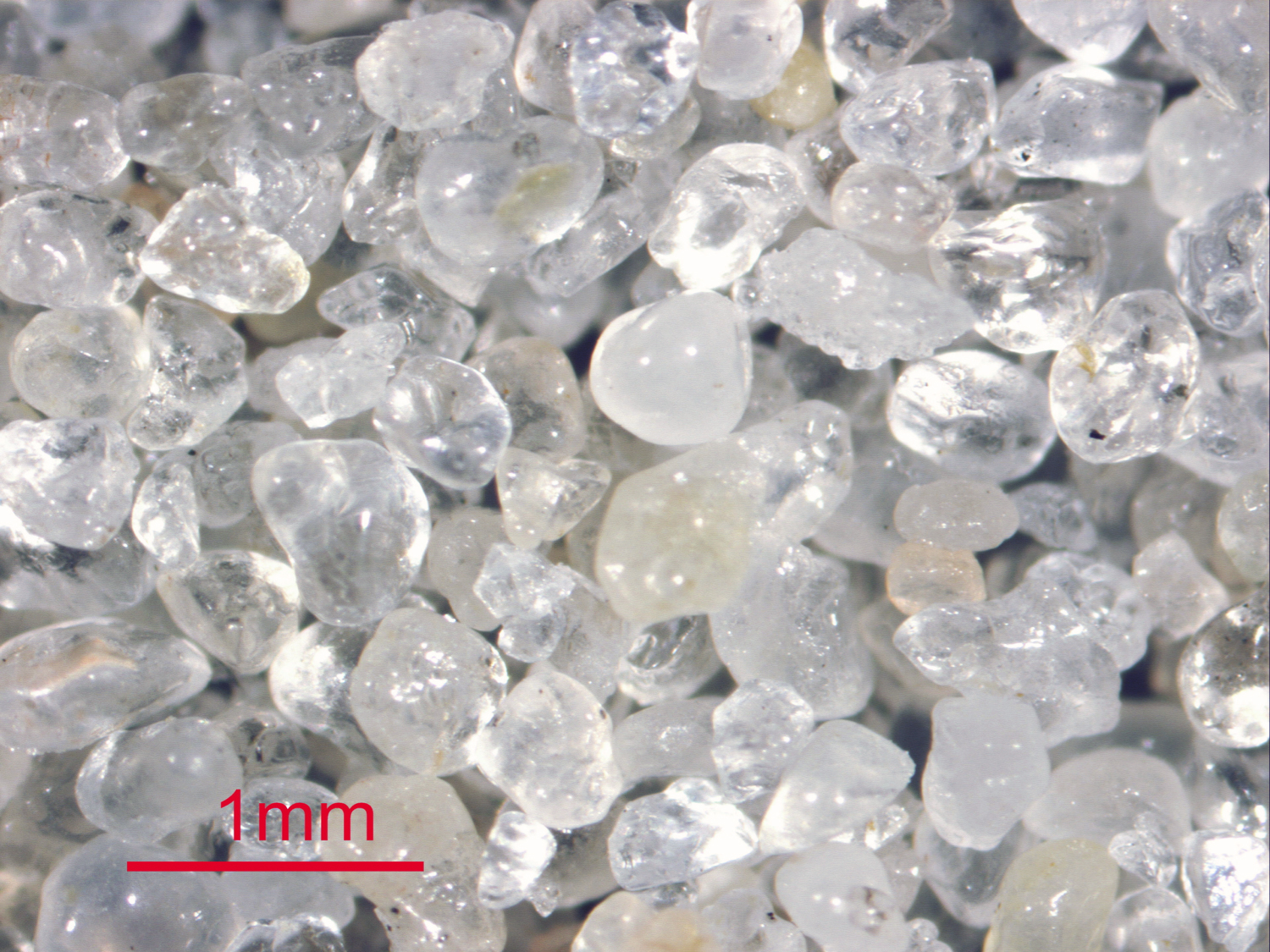
The primary ingredient: quartz
On Florida's Atlantic coast, the dominant component of beach sand is quartz (silicon dioxide, SiO₂). Quartz is one of the hardest and most chemically resistant common minerals, which is precisely why it survives the long journey from mountain to beach. Less durable minerals are ground to dust or dissolved along the way, but quartz endures.
The quartz grains in Florida beach sand originated primarily in the Appalachian Mountains, or, more accurately, in the ancient precursors to the modern Appalachians. Over hundreds of millions of years, weathering and erosion have broken down Appalachian rock, releasing quartz grains that are carried by rivers to the Atlantic coast. Once these grains reach the ocean, longshore currents, the coastal conveyor belt driven by waves striking the shore at an angle, transport them gradually southward along the Atlantic seaboard.
This process has been operating for so long that Florida's Atlantic beaches have accumulated enormous reserves of quartz sand. The grains found on Treasure Coast beaches may have begun their journey in the mountains of Georgia, the Carolinas, or even Virginia, transported hundreds of miles over millions of years by the relentless physics of water flow and wave action.
Shell fragments: the biological component
The second major component of Florida beach sand is biogenic carbonate material: fragments of shells, coral, sea urchin spines, and other calcareous organisms. These fragments are produced locally by the abundant marine life in Florida's coastal waters. When shells and coral are broken by wave action, biological boring, and chemical dissolution, they contribute carbonate particles to the beach sand budget.
On Treasure Coast beaches, shell fragments make up a variable but significant percentage of the sand. Common contributors include:
- Bivalve shells: Broken fragments of clams, cockles, scallops, and oysters.
- Gastropod shells: Pieces of snail shells, whelks, and conchs.
- Echinoderm fragments: Spines and test plates from sea urchins and sand dollars.
- Coral pieces: Small fragments of both living and fossil coral.
- Foraminifera: Tiny calcareous shells of single-celled organisms that contribute to the very finest sand fraction.
The ratio of quartz to shell material in Florida beach sand varies by location and reflects both the available sediment sources and the local wave energy. High-energy beaches tend to have more quartz (because shells are fragmented into particles too small to remain on the beach), while lower-energy areas accumulate larger shell fragments. This biological component connects beach sand directly to the same processes that formed coquina rock. Given enough time and the right cementation conditions, today's shell-rich beach sand could become tomorrow's coquina.
Regional variations across Florida
Atlantic coast (including the Treasure Coast)
Atlantic coast sand is dominated by fine to medium quartz grains, typically tan to light brown in color. The Treasure Coast, covering St. Lucie, Martin, and Indian River counties, features sand that is intermediate in composition between the quartz-rich beaches of northeast Florida and the more shell-rich beaches of southeast Florida. On the Treasure Coast, you will also find occasional fragments of Anastasia Formation coquina mixed with the loose sand, particularly near rocky outcrops.
Gulf coast
Gulf coast sand varies dramatically from north to south. The panhandle beaches (Destin, Panama City Beach) feature brilliantly white quartz sand, some of the purest quartz beach sand in the world, sourced from Appalachian rivers via the Apalachicola River system. Moving south along the Gulf coast, the quartz content decreases and the carbonate content increases. Southwest Florida beaches (Sanibel, Marco Island) are famously shell-rich, with carbonate material making up the majority of the sand.
Florida Keys
In the Florida Keys, beach sand is almost entirely biogenic carbonate: fragments of coral, mollusks, calcareous algae (especially Halimeda), and foraminifera. There is virtually no quartz in Keys beach sand because the islands are too far from mainland quartz sources and sit atop a carbonate platform composed entirely of reef-derived limestone.
Heavy minerals: the hidden component
Among the most geologically interesting components of Florida beach sand are the heavy minerals, mineral grains denser than quartz that are concentrated by wave action into dark streaks and patches visible on many Florida beaches. The Treasure Coast is particularly known for its heavy mineral deposits.
Common heavy minerals in Florida beach sand include:
- Ilmenite (FeTiO₃): A black iron-titanium oxide mineral, the primary source of titanium in Florida's mineral sands industry.
- Rutile (TiO₂): A reddish-brown to black titanium dioxide mineral, also commercially important.
- Zircon (ZrSiO₄): A durable mineral used in ceramics and as a source of zirconium. Zircon grains in beach sand can be dated radiometrically to determine the age of their source rocks.
- Monazite ((Ce,La,Nd,Th)PO₄): A phosphate mineral containing rare earth elements. Florida beach monazite has been a source of rare earth extraction.
- Leucoxene: An alteration product of ilmenite, cream to tan in color, commercially valuable as a titanium feedstock.
- Staurolite: A distinctive cross-shaped metamorphic mineral occasionally found in Florida beach sand, originating from Appalachian metamorphic rocks.
These heavy minerals are concentrated on beaches because of their higher density. When waves wash back down the beach face, lighter quartz grains are carried seaward while heavier mineral grains lag behind, creating the dark "placer" deposits visible after storm events. Florida's heavy mineral sand deposits have been commercially mined since the 1940s, making the state one of the largest producers of titanium minerals in the United States.
How sand gets to the beach
Florida beach sand arrives through several geological transport mechanisms:
Longshore drift
The primary mechanism for sand delivery to Florida's Atlantic beaches is longshore drift, the net southward transport of sediment along the coast by wave-driven currents. On the Atlantic coast, the dominant wave approach is from the northeast, which drives a persistent southward current that carries sand from northern sources toward the Treasure Coast and beyond. This process has been delivering quartz sand to Florida for millions of years.
River transport
Rivers carry sediment from inland sources to the coast. In Florida, the most significant river-derived sediment enters the Gulf of Mexico via the Apalachicola River and other panhandle rivers. On the Atlantic side, rivers contribute relatively less sand because the coastal plain sediments they traverse are already fine-grained.
Erosion of coastal formations
The erosion of existing geological formations contributes sand to beaches. On the Treasure Coast, wave erosion of the Anastasia Formation releases both quartz grains and shell fragments that were cemented within the rock, recycling ancient beach sediment back into the modern beach system. This is a particularly important sand source where the formation is exposed at the shoreline.
Offshore sources
During major storms, wave action can mobilize sand from offshore deposits and deliver it to the beach. Beach nourishment projects also draw on offshore sand sources, dredging sand from the continental shelf and placing it on eroded beaches. The selection of appropriate nourishment sand requires careful geological analysis to match the grain size and composition of the native beach, as detailed by the USGS Coastal and Marine Science Center.
Sand grain analysis
Geologists study Florida beach sand at multiple scales to understand its origins and transport history:
- Grain size: Measured using standard sieve analysis or laser diffraction. Florida Atlantic coast sand is typically fine to medium (0.125–0.5 mm diameter).
- Roundness: Well-traveled sand grains become progressively more rounded. Florida beach quartz is generally sub-rounded to rounded, reflecting its long transport history from the Appalachians.
- Mineralogy: Identified through microscopy, X-ray diffraction, or electron microscopy. The mineral assemblage reveals the provenance (source region) of the sand.
- Surface texture: Under electron microscopy, sand grains show characteristic surface features, from percussion marks left by wave tumbling to dissolution pits from chemical weathering, that record their transport history.
Beach nourishment and sand sources
As coastal erosion threatens Florida's beaches, beach nourishment, the placement of imported sand on eroded shorelines, has become a major coastal management strategy. On the Treasure Coast and throughout the state, the Florida Department of Environmental Protection oversees nourishment projects that require careful geological assessment of sand sources.
Nourishment sand must closely match the grain size, mineral composition, and color of the native beach sand. Incompatible sand can cause ecological problems, alter beach profile dynamics, and produce aesthetically unacceptable results. This requirement connects modern coastal engineering directly to the geological study of Florida beach sand: understanding what the sand is made of is essential for maintaining it.
Frequently asked questions about Florida beach sand
Why is some Florida beach sand white and some tan?
Color variations in Florida beach sand reflect differences in mineral composition. The brilliant white sand of panhandle beaches (like Destin) is nearly pure quartz with very few iron-bearing minerals. Tan and brown sands on Atlantic coast beaches contain more iron-stained quartz grains and shell fragments. Dark patches are concentrations of heavy minerals like ilmenite. The reddish tint sometimes seen in sand indicates the presence of iron oxide coatings on quartz grains.
Can you find fossils in Florida beach sand?
Yes. Florida beach sand frequently contains fossilized material, particularly shark teeth, ray dental plates, and fragments of fossilized bone and shell. These fossils erode from underlying geological formations and are concentrated by wave action alongside beach sand grains. The Treasure Coast is especially productive for fossil hunting, with finds including megalodon teeth and Pleistocene vertebrate remains.
Is Florida beach sand actually ground-up mountains?
In large part, yes. The quartz grains in Florida's Atlantic coast beach sand originated in the Appalachian Mountains and their ancient precursors. Over hundreds of millions of years, weathering and erosion broke these mountains down, grain by grain. Rivers carried the resulting quartz sand to the coast, and longshore currents transported it southward to Florida. Each quartz grain is literally a tiny fragment of a mountain that may no longer exist.
How deep is the sand on Florida beaches?
Natural sand thickness on Florida beaches varies widely. On the Treasure Coast, the unconsolidated sand layer above the Anastasia Formation bedrock typically ranges from a few feet to 15–20 feet. However, this thickness changes seasonally and in response to storms. After major erosion events, the underlying coquina rock may be temporarily exposed. Beach nourishment projects add additional sand thickness, typically 3–6 feet above the existing beach profile.
What causes the black sand streaks on Florida beaches?
The dark streaks visible on many Florida beaches are placer deposits of heavy minerals, primarily ilmenite, rutile, and other iron- and titanium-bearing minerals. These minerals are denser than quartz and are concentrated by wave action: as waves wash sand back down the beach face, lighter grains are carried away while heavier grains remain behind. Storm events tend to produce the most dramatic heavy mineral concentrations.