What Are Florida's Rock Formations?
Florida's rock formations are the distinct layers of sedimentary rock — primarily limestone, dolostone, sandstone, and coquina — that make up the Florida Platform. These formations were deposited over hundreds of millions of years, mostly in shallow marine environments. Each formation represents a specific geological time period and set of environmental conditions, and together they form the foundation that supports Florida's landscape, aquifers, and ecosystems.
Florida's geological foundation is unlike any other state in the eastern United States. While the Appalachian states sit on ancient metamorphic and igneous rocks, Florida rests on a massive carbonate platform built almost entirely from the remains of marine organisms. The formations described here — from the deep Ocala Limestone to the surface-level Anastasia Formation — tell the story of a land that spent most of its existence beneath the sea.
Featured Articles
Featured Articles
Formations
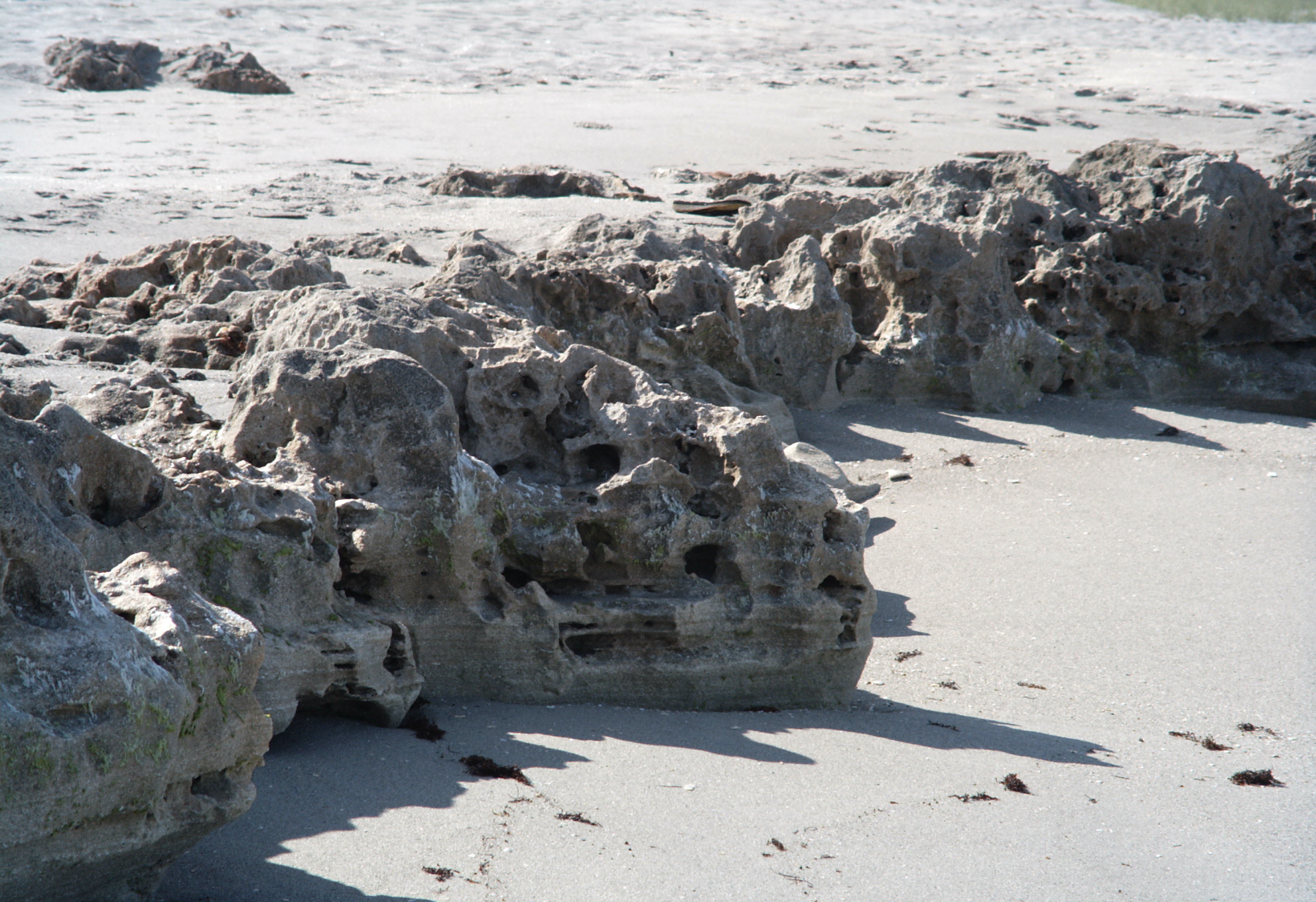
The Pleistocene-age coquina limestone that underlies much of Florida's Atlantic coast, from St. Johns County to Palm Beach County. Learn about its composition, formation, and role in coastal protection.
Formations
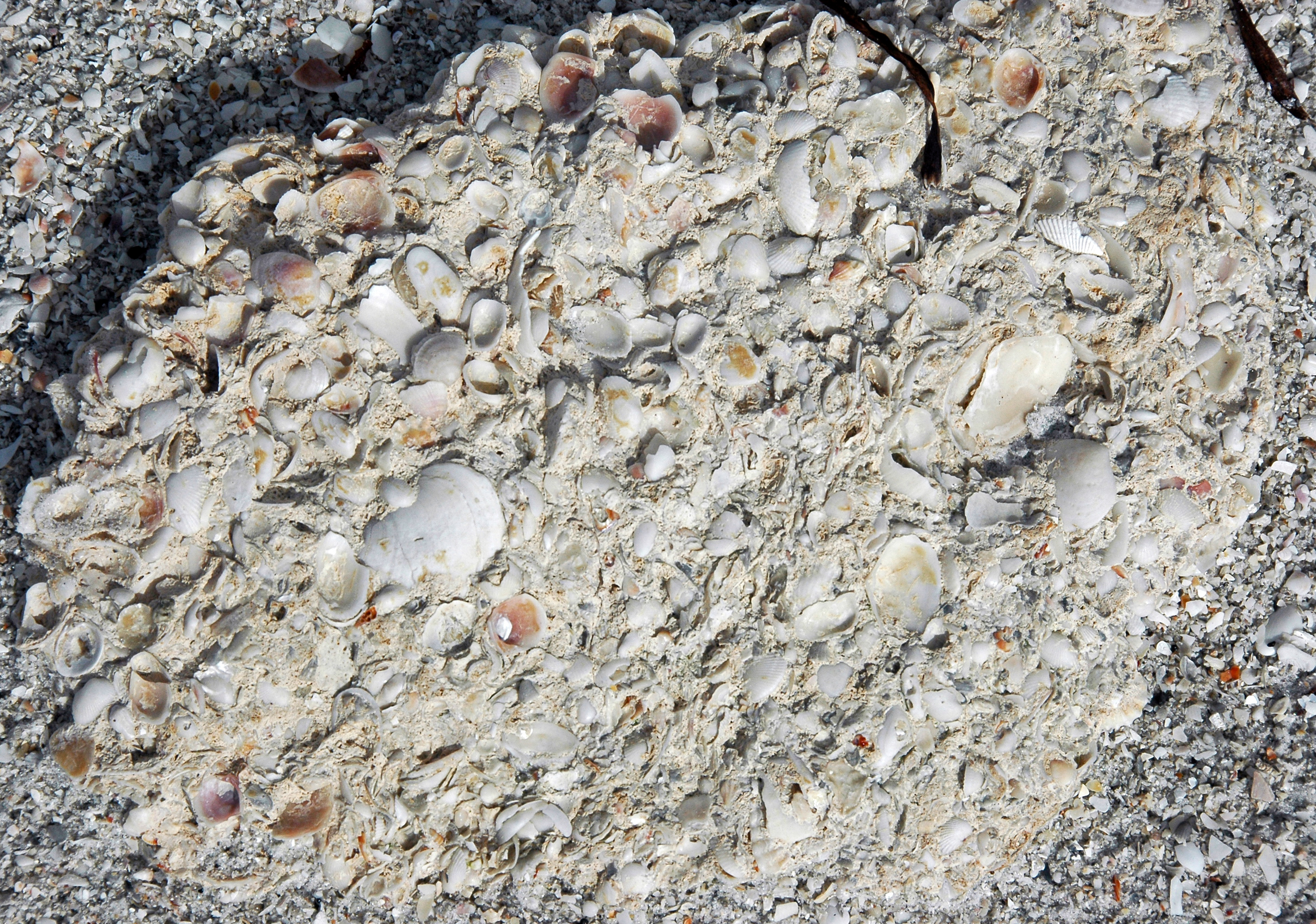
A sedimentary rock made almost entirely of cemented shell fragments, coquina has served as both building material and geological record across Florida for centuries.
Overview
Major Florida Rock Formations
Ocala Limestone (Late Eocene, ~40–34 Million Years Ago)
The Ocala Limestone is one of the most geologically significant formations in Florida. This thick, pure limestone unit was deposited during the Late Eocene epoch when virtually all of Florida was submerged beneath a warm, shallow sea. The Ocala Limestone is the primary component of the upper Floridan Aquifer, making it critically important to Florida's water supply. It crops out at the surface in parts of north-central Florida, where it forms the limestone terrain visible at places like Rainbow Springs State Park.
Hawthorne Group (Miocene, ~23–5 Million Years Ago)
The Hawthorne Group is a complex assemblage of phosphatic sands, clays, limestones, and dolostones deposited during the Miocene epoch. This formation is Florida's primary source of phosphate — a mineral so abundant that Florida produces roughly 75 percent of the phosphate used in the United States. The Hawthorne Group also acts as a confining layer over the Floridan Aquifer, and where it has eroded away, the underlying limestone is exposed to groundwater dissolution, creating sinkhole-prone terrain. Learn more about how this affects Florida sinkholes.
Anastasia Formation (Pleistocene, ~126,000–10,000 Years Ago)
The Anastasia Formation is a coquina limestone unit that underlies much of Florida's Atlantic coastline from St. Augustine to Palm Beach. Composed of cemented shell hash, quartz sand, and coquina, this formation was deposited during Pleistocene interglacial periods when sea levels were higher than today. It plays a vital role in coastal protection and supports the Surficial Aquifer System.
Miami Limestone (Late Pleistocene, ~130,000–120,000 Years Ago)
The Miami Limestone underlies much of southeastern Florida, from roughly Palm Beach County south through the Florida Keys. This oolitic and bryozoan limestone was deposited during the Sangamonian interglacial period and forms the bedrock foundation for the Miami metropolitan area. Its porous nature makes it an important component of the Biscayne Aquifer.
Tamiami Formation (Pliocene, ~5–2.5 Million Years Ago)
Named after the Tamiami Trail connecting Tampa and Miami, this formation consists of sandy limestone, sandstone, and clay deposited during the Pliocene epoch. The Tamiami Formation is rich in marine fossils and is exposed in quarries across southwestern Florida, where paleontologists have recovered important vertebrate fossil assemblages. Its relationship to the Treasure Coast ecosystem reflects the interplay between geology and ecology.
FAQ
Frequently Asked Questions About Florida Rock Formations
What is the most common rock in Florida?
Limestone is by far the most common rock in Florida. The Florida Platform consists of thousands of feet of limestone and dolostone deposited over hundreds of millions of years. At the surface, you'll encounter various types of limestone including the Ocala Limestone, Miami Limestone, and the coquina limestone of the Anastasia Formation.
Does Florida have any igneous or metamorphic rocks?
Florida's surface geology is entirely sedimentary, but deep beneath the carbonate platform lie igneous and metamorphic basement rocks that originated as part of the African continent. These rocks, found at depths of several thousand feet, are only known from deep well cores and have been dated to the Precambrian and early Paleozoic eras. Learn more in our geological timeline.
Where can I see exposed rock formations in Florida?
Florida's flat terrain and thick soil cover mean that natural rock exposures are relatively rare. The best places to see geological formations include: Washington Oaks Gardens State Park (Anastasia Formation), Devil's Millhopper Geological State Park (multiple formations visible in sinkhole walls), Windley Key Fossil Reef Geological State Park (Key Largo Limestone), and the many limestone springs in north-central Florida (Ocala Limestone).
Why is Florida so flat compared to other eastern states?
Florida's flat topography reflects its geological origin as a carbonate platform — essentially a shallow marine shelf built up by sediment accumulation rather than mountain-building forces. While the Appalachian states were shaped by tectonic compression, folding, and faulting, Florida accumulated its sedimentary layers horizontally in shallow seas. The highest point in Florida, Britton Hill, is only 345 feet above sea level.