Florida sits atop one of the most prolific fossil records in the eastern United States. Millions of years of fluctuating sea levels, warm shallow seas, and phosphate-rich sediments have created a treasure trove of preserved ancient life stretching from the Eocene through the Pleistocene. From the legendary megalodon teeth that wash onto Treasure Coast beaches to the remarkably complete vertebrate skeletons unearthed in the Bone Valley region, Florida fossils tell a story spanning more than 40 million years of Earth history.
Whether you are a seasoned collector, a curious beachcomber, or a student researching paleontology, this section provides detailed guides to finding, identifying, and understanding the fossils that make Florida a world-class destination for amateur and professional fossil hunters alike.
Guides
Fossil Hunting Guides
Guide
A comprehensive guide to finding shark teeth, shells, coral, and vertebrate fossils across St. Lucie, Martin, and Indian River counties. Learn the best locations, seasons, and techniques for successful Treasure Coast fossil hunting.
Guide
Everything you need to know about finding, identifying, and grading megalodon teeth in Florida. Discover why the Sunshine State is one of the best places on Earth to find teeth from the largest shark that ever lived.
Overview
What Fossils Are Found in Florida?
Florida's geological history has produced an extraordinary diversity of fossils. The state's position as a shallow marine platform for much of its existence means that marine fossils dominate the record, though terrestrial finds are far from uncommon. Here is an overview of the major categories of Florida fossils that collectors and researchers encounter regularly.
Shark Teeth
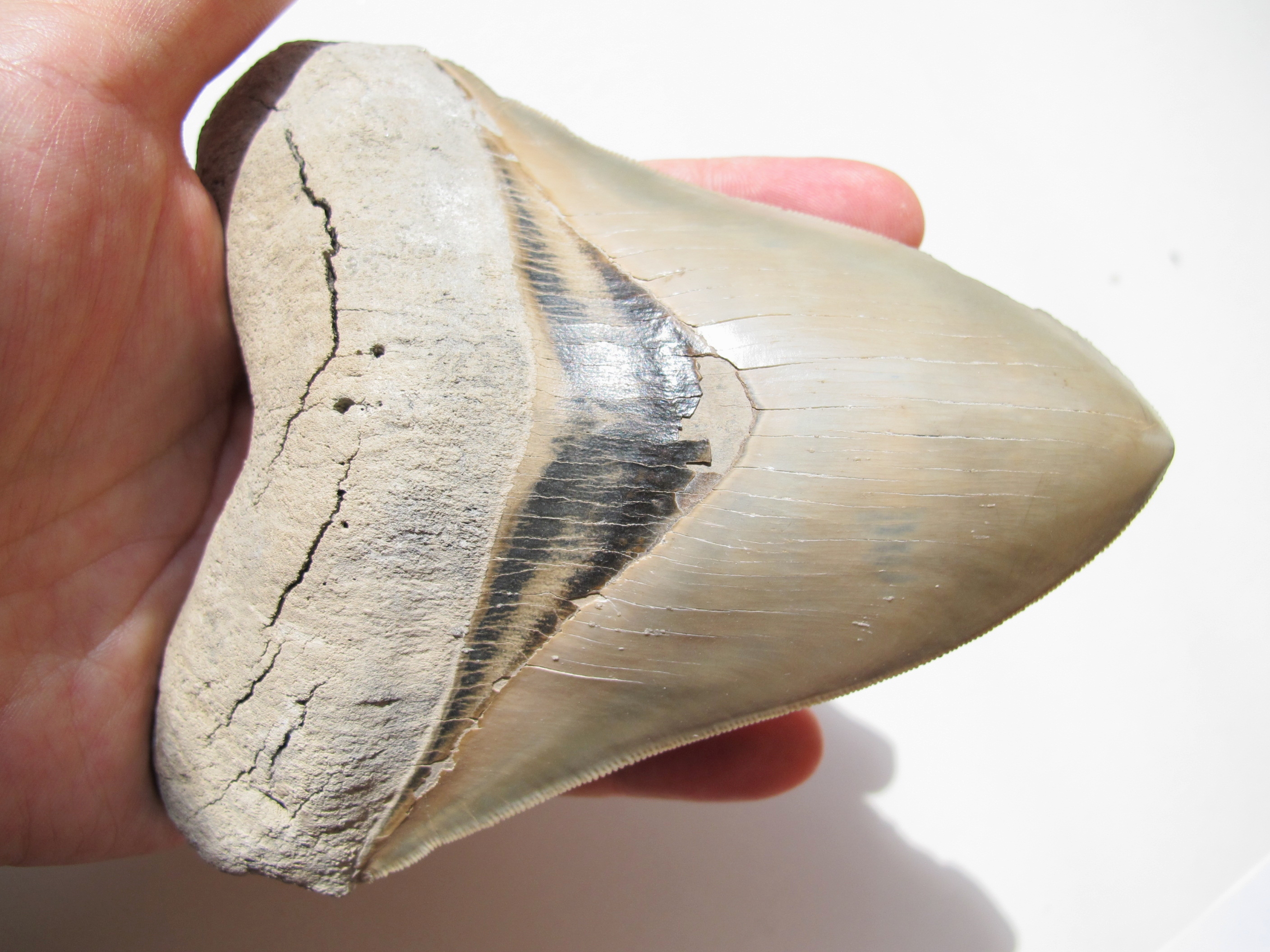
Shark teeth are by far the most commonly collected Florida fossils. Because sharks continuously shed and replace their teeth throughout their lives, a single shark could produce tens of thousands of teeth over its lifetime. Multiply that by millions of years and countless individual sharks, and you begin to understand why Florida's rivers, beaches, and phosphate mines yield shark teeth in staggering quantities. Species represented include the giant Otodus megalodon, great white shark ancestors (Carcharodon), various mako sharks (Isurus), bull sharks (Carcharhinus), sand tigers (Carcharias), and dozens of other species spanning the Miocene, Pliocene, and Pleistocene epochs.
Fossil Shells and Invertebrates
Mollusks, gastropods, echinoids, and brachiopods are abundant in Florida's fossil record. Collectors frequently find beautifully preserved scallops, clams, oysters, conch shells, and sea urchin tests in formations like the Anastasia Formation and the Tamiami Formation. Many of these specimens retain remarkable detail, including original shell ornamentation and growth lines.
Fossil Coral
Ancient coral colonies thrived in Florida's warm shallow seas, and fossilized coral heads, brain corals, and branching corals are regularly found throughout the state. These specimens provide valuable evidence about past ocean temperatures and reef ecosystems. On the Treasure Coast, fossil coral often turns up on beaches alongside coquina rock and shell hash.
Vertebrate Fossils
Florida has produced some of the most significant vertebrate fossil discoveries in North America. The Bone Valley region in central Florida has yielded remains of ancient horses, camels, rhinoceroses, mastodons, mammoths, giant ground sloths, saber-toothed cats, and dire wolves. Marine vertebrate fossils include whale bones, dolphin skulls, sea turtle shells, and ray dental plates. These finds span from the Miocene through the Pleistocene, documenting the dramatic shifts in Florida's fauna as the peninsula emerged and submerged over millions of years.
Dugong and Manatee Bones
Florida's rivers and coastal sediments occasionally yield bones and rib fragments from ancient sirenians, including dugongs and early manatees. The extinct dugong Metaxytherium was particularly common in Florida's Miocene seas, and its dense, heavy rib bones are distinctive finds. Modern manatees (Trichechus manatus) are the living descendants of this ancient lineage, and their continued presence in Florida waters like the Indian River Lagoon ecosystem connects the present to the deep past.
Locations
Major Fossil Collecting Areas in Florida
Peace River
The Peace River in central Florida is arguably the most famous fossil hunting destination in the state. Wading and sifting the river's gravel bars and sandbars produces abundant shark teeth, ray dental plates, horse teeth, and fragments of larger vertebrate fossils. The river cuts through Bone Valley Formation sediments, exposing fossils that accumulated over millions of years in ancient marine and terrestrial environments.
Bone Valley Region
The Bone Valley Formation, centered on Polk and Hillsborough counties, is one of the richest fossil-bearing formations in North America. Phosphate mining operations in this region have uncovered enormous quantities of fossils, including complete skeletons of extinct mammals. While active mines are not open to the public, certain spoil piles and designated collecting areas have produced extraordinary finds for amateur collectors.
Treasure Coast Beaches and Waterways
The beaches and waterways of St. Lucie, Martin, and Indian River counties offer productive fossil hunting, particularly after storms and high surf events. Shark teeth, fossil shells, and coral fragments wash out of submerged geological formations and concentrate along the shoreline. The Indian River Lagoon, its spoil islands, and the region's tidal creeks also produce fossils as water erodes through ancient sediment layers. Our Treasure Coast fossil hunting guide covers these locations in detail.
Florida's Fossil Record: A Definition
Florida's fossil record refers to the preserved remains and traces of ancient organisms found within the state's sedimentary rock layers, unconsolidated sediments, and waterways. Spanning from the Eocene epoch (approximately 40 million years ago) to the late Pleistocene (approximately 10,000 years ago), this record encompasses marine invertebrates, sharks, bony fishes, marine mammals, terrestrial mammals, reptiles, and birds. Florida's fossil record is considered one of the most significant in eastern North America due to the state's long history as a shallow marine platform, its phosphate-rich geological formations, and the exceptional preservation conditions created by its warm, calcium-carbonate-saturated waters.
Context
Understanding Florida's Geological Context
To fully appreciate Florida fossils, it helps to understand the geological forces that created and preserved them. Florida's position on the Florida Platform, a broad carbonate shelf extending well beyond the present-day coastline, means that much of the state was underwater for extended periods. As sea levels rose and fell over millions of years, successive layers of marine sediment accumulated, trapping and preserving the remains of organisms that lived in those ancient seas.
The rock formations that underlie Florida tell this story in sequential layers. From the ancient limestones of the Ocala Group to the phosphate-bearing sediments of the Bone Valley Formation and the relatively young coquina of the Anastasia Formation, each layer represents a different chapter in Florida's geological past. Understanding where these formations are exposed at the surface, along riverbanks, in road cuts, and on eroding beaches, is the key to knowing where to look for fossils.
For a broader perspective on how Florida's geology developed over deep time, visit our geological timeline of Florida.
FAQ
Frequently Asked Questions About Florida Fossils
Is it legal to collect fossils in Florida?
In most cases, yes. Florida law allows the collection of invertebrate fossils and common vertebrate fossils such as shark teeth on public lands and beaches for personal use without a permit. However, collecting vertebrate fossils on state-owned submerged lands or removing significant vertebrate specimens requires a permit from the Florida Museum of Natural History. Collecting on private property always requires the landowner's permission. Federal lands such as national parks and wildlife refuges have their own rules, and collecting fossils there is generally prohibited without special authorization.
What is the best time of year to hunt for fossils in Florida?
Fossil hunting in Florida can be productive year-round, but certain conditions improve your odds. On beaches, the best collecting follows winter cold fronts and tropical storms, when high surf and strong currents erode sand and expose fossil-bearing layers. River collecting is often best during the dry season (November through April), when water levels drop and expose more of the riverbed. Summer rains can raise river levels significantly, making wading difficult and reducing visibility.
Where can I get fossils identified in Florida?
The Florida Museum of Natural History in Gainesville offers fossil identification services and maintains an extensive reference collection. Local fossil clubs, many of which are affiliated with the Florida Paleontological Society, also hold identification events and meetings where experienced collectors can help identify your finds. Online communities and university geology departments are additional resources.
What equipment do I need for fossil hunting in Florida?
Basic fossil hunting on Florida beaches requires little more than sharp eyes and a container for your finds. For river collecting, a mesh sieve or screen (sometimes called a Florida snow sifter), water shoes or waders, and a sturdy bag are essential. A small garden trowel, a magnifying loupe, and a field guide to Florida fossils are helpful additions. Sun protection, drinking water, and insect repellent are practical necessities in Florida's climate.